Cerchi un'alternativa a Herdr? Scopri AgentsRoom.
Herdr è un ambiente di esecuzione open source per agenti di coding: un singolo binario Rust con licenza Apache 2.0 che assegna a ogni agente un vero pannello di terminale, rileva da solo se sta lavorando, è bloccato o è inattivo, e lo tiene in vita anche a coperchio chiuso o dopo un riavvio. AgentsRoom risponde allo stesso problema un livello più in alto, come un IDE agentico completo: un backlog, la revisione dei diff, ruoli specializzati, team di agenti e un'app mobile.
Entrambi gli strumenti esistono perché eseguire più agenti di coding contemporaneamente è ingestibile in un terminale classico. Herdr risolve la parte del terminale e si ferma lì, di proposito: è infrastruttura, e lascia il flusso di lavoro a te, ai tuoi script e ai suoi plugin. AgentsRoom è il flusso di lavoro. Un ticket che un agente prende in carico, il diff che ne è uscito, la revisione, il commit, una memoria su cui scrive tutto il team, e una notifica push sul telefono quando un agente ha bisogno di una risposta.
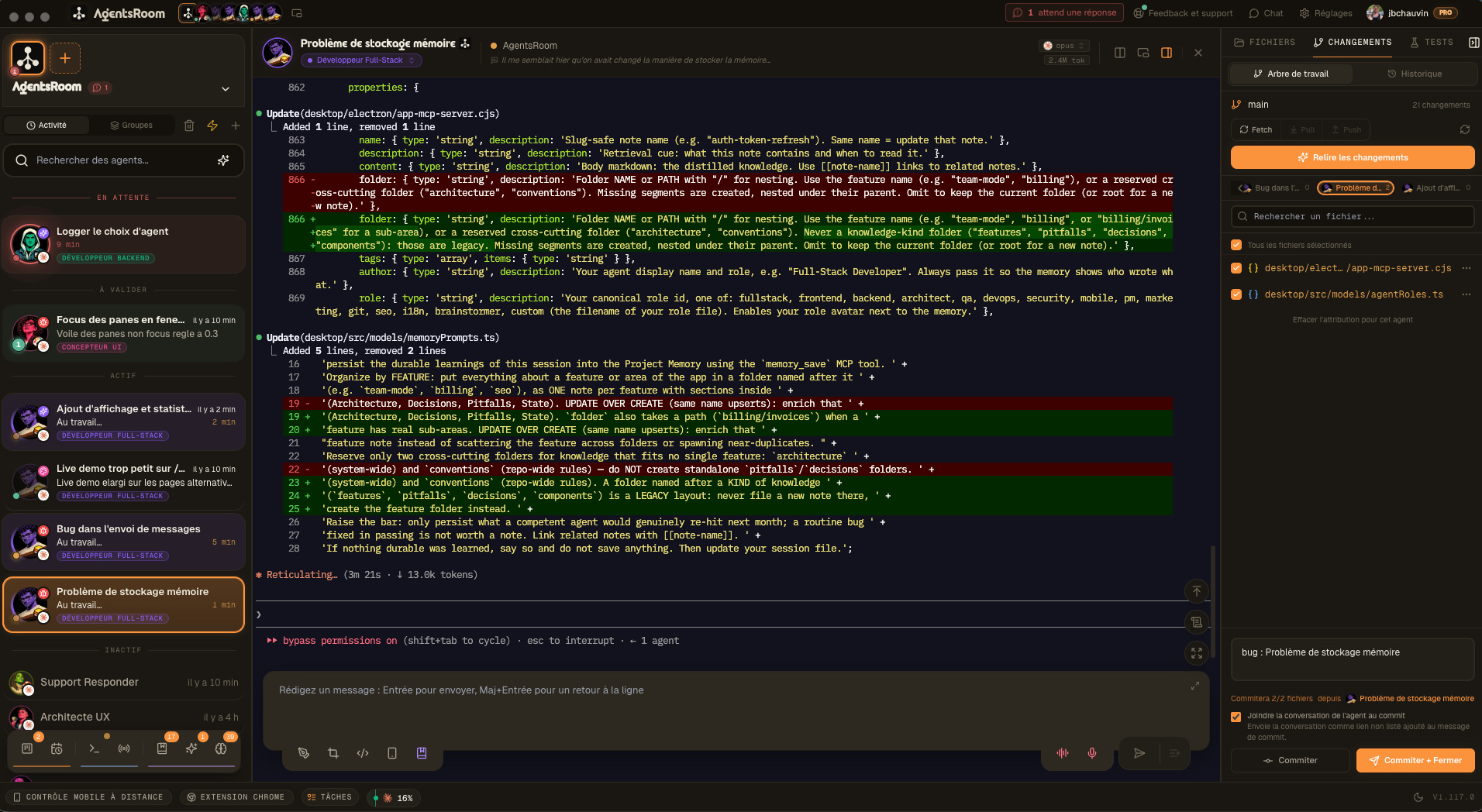
La differenza a colpo d'occhio
Con Herdr
- -Nativo nel terminale: una TUI dentro l'emulatore che usi già, quindi niente finestra, niente albero dei file e niente vista dei diff
- -Stato dell'agente automatico per ogni pannello: al lavoro, bloccato o inattivo, su tutti i progetti
- -Un daemon in background: le sessioni sopravvivono al coperchio chiuso, alla rete che cade o a un riavvio
- -Open source con licenza Apache 2.0, un singolo binario Rust, più un'API socket e un catalogo di plugin
- -Nessun backlog, nessun ruolo, nessuna revisione del codice, nessun modello per agente: un pannello resta un pannello
- -Oggi nessun client grafico e nessuna app mobile: la TUI inclusa e SSH sono le uniche vie d'accesso
Con AgentsRoom
- +Un vero IDE agentico: agenti, progetti, terminali, file e diff in un'unica finestra
- +Revisione del codice integrata: diff affiancati con evidenziazione della sintassi, filtrati per l'agente che li ha scritti, e poi il commit
- +Un backlog da cui lavorano gli agenti: trascina un ticket su In corso e un agente ci si mette al lavoro
- +14 ruoli specializzati, un modello per agente e team di agenti che si passano il lavoro su una lavagna visuale
- +Una memoria di progetto condivisa, una libreria di prompt e una libreria di skill che sopravvivono alla sessione
- +Un'app companion per iOS e Android con notifiche push: rispondi a un agente bloccato dal telefono
Quello che un multiplexer non può fare per te
Herdr possiede i terminali. AgentsRoom possiede tutto ciò che sta intorno: il ticket che avvia il lavoro, il diff che ne esce, la revisione, la memoria e il telefono che hai in tasca.
Leggi il diff, non lo storico del terminale
Herdr ti mostra un pannello. AgentsRoom ti mostra il codice: ogni file toccato da un agente, diff affiancati con evidenziazione della sintassi, filtrati per l'agente che li ha scritti, e un commit alla fine. Un multiplexer non ha idea di che cosa sia un diff, quindi rivedere il lavoro significa leggere lo storico del terminale o aprire un altro strumento.
Ticket, non prompt
AgentsRoom porta con sé un backlog Kanban. Scrivi un'attività, la trascini su In corso e un agente la prende in carico con il ruolo giusto e il modello giusto. Herdr ha pannelli, non lavoro: quello che ogni agente dovrebbe fare vive nella tua testa o in un file di testo lì accanto.
Una squadra, non una mandria
14 ruoli specializzati, un modello per agente e team di agenti che disegni su una lavagna: Dev passa la mano al QA, il QA al revisore, portandosi dietro il riepilogo della funzionalità, il diff e i rischi. In Herdr ogni pannello è la stessa shell anonima, e la coreografia devi scrivertela tu.
Una memoria che sopravvive alla sessione
Una memoria di progetto condivisa su cui scrivono i tuoi agenti, una libreria di prompt e una libreria di skill riutilizzate tra progetti e colleghi. Herdr conserva lo storico del terminale e lo ripropone dopo un riavvio, il che è una funzionalità vera, ma lo storico è passato, non conoscenza.
Agenti che guidano l'IDE
Herdr espone un'API socket perché un agente possa dividere i pannelli e mandare un prompt a un altro agente. AgentsRoom espone il prodotto stesso via MCP: il backlog, i terminali, la libreria di prompt, la memoria di progetto e il browser. Un agente apre da solo il proprio ticket, legge la memoria del team ed esegue un giro di QA senza uscire dalla sua sessione.
Il telefono che hai in tasca
Un'app companion per iOS e Android replica i tuoi agenti, invia una notifica push quando uno è bloccato o ha finito, e ti permette di rispondergli ovunque tu sia. Aggiungi la flotta remota per le tue altre macchine e gli agenti cloud che girano a portatile chiuso. I client di Herdr oggi sono la TUI inclusa e SSH da un altro terminale.
Confronto funzionalità per funzionalità
Come si confrontano AgentsRoom e Herdr sulle funzionalità che contano quando esegui più agenti di coding contemporaneamente. Le prime righe sono quelle in cui vince Herdr.
| Funzionalità | AgentsRoom | Herdr |
|---|---|---|
| Open source | ✗ | ✓ |
| Gira nel terminale che usi già | ✗ | ✓ |
| Binario singolo, senza Electron | ✗ | ✓ |
| Catalogo di plugin | MCP | ✓ |
| Gli agenti continuano a girare con l'app chiusa | Cloud agents | ✓ |
| Stato dell'agente (al lavoro/bloccato/inattivo) | ✓ | ✓ |
| Terminale dedicato per agente | ✓ | ✓ |
| Sessioni persistenti (stacca e riconnetti) | ✓ | ✓ |
| Gestione multi-progetto | ✓ | ✓ |
| App desktop visuale | ✓ | ✗ |
| Revisione dei diff e commit integrati | ✓ | ✗ |
| Diff filtrato per agente | ✓ | ✗ |
| Backlog di attività che alimenta gli agenti | ✓ | ✗ |
| Ruoli specializzati per agenti (14) | ✓ | ✗ |
| Team di agenti (flussi di lavoro visuali) | ✓ | ✗ |
| Modello per agente (Opus/Sonnet/Haiku) | ✓ | ✗ |
| Librerie di prompt e di skill | ✓ | ✗ |
| Memoria di progetto condivisa | ✓ | ✗ |
| Gli agenti guidano l'IDE via MCP | ✓ | ✗ |
| Browser integrato per il QA | ✓ | ✗ |
| Attività pianificate e webhook | ✓ | Plugins |
| Macchine remote e agenti cloud | ✓ | SSH |
| Notifiche push su mobile | ✓ | ✗ |
| App mobile companion | ✓ | ✗ |
| Modifica CLAUDE.md dall'interfaccia | ✓ | ✗ |
| Tunnel di anteprima live (gratuito) | ✓ | ✗ |
| Tempo di configurazione | 30 sec | ~1 min |
Guarda AgentsRoom in azione
Guarda come AgentsRoom guida più agenti di coding da un'unica finestra, con un backlog, ruoli specializzati e un terminale per ogni agente.
L'app desktop, in modalità Semplice
Sul telefono la demo esegue la vera app desktop nella sua modalità di interfaccia Semplice: un progetto, i suoi agenti, un prompt. La cabina di pilotaggio completa è sul computer.
Quando Herdr potrebbe essere la scelta migliore
Crediamo nei confronti onesti. Ecco i casi in cui Herdr è davvero lo strumento migliore.
Vuoi restare nel tuo terminale
Herdr gira dentro iTerm2, Ghostty, Alacritty o qualunque terminale tu stia già usando, e conserva i tuoi temi, le tue scorciatoie e la tua shell. AgentsRoom è un'applicazione desktop: ti dà una finestra, non un pannello nel tuo setup esistente. Se tutto il tuo flusso di lavoro vive nel terminale e vuoi tenere d'occhio gli agenti senza uscirne, Herdr è la risposta giusta.
Ti serve l'open source, oppure l'impronta più leggera possibile
Herdr è distribuito con licenza Apache 2.0 come un singolo binario Rust, senza alcuna dipendenza a tempo di esecuzione e senza Electron, e ha la comunità che dimostra che il modello funziona: decine di migliaia di stelle su GitHub e centinaia di migliaia di installazioni in pochi mesi. Puoi leggerne il sorgente, farne un fork e verificarlo, e gira senza problemi su un VPS senza interfaccia grafica, dove un'app desktop semplicemente non può. AgentsRoom è un'applicazione desktop proprietaria con un piano gratuito. Se le tue policy impongono l'open source, o se la macchina non ha alcuno schermo, Herdr vince su entrambi i fronti.
Vuoi che siano i tuoi agenti a guidare il multiplexer
Herdr espone una CLI pensata per gli agenti e un'API socket locale, così un agente può creare aree di lavoro, dividere pannelli, mandare un prompt a un altro agente e sottoscriversi ai cambi di stato da solo. Sopra a tutto questo c'è un catalogo di plugin con centinaia di plugin della comunità e il rilevamento di più di venti CLI di agenti. È un modello davvero diverso da quello di un centro di comando grafico. Se stai costruendo la tua orchestrazione e vuoi una base scriptabile sotto di essa, Herdr è progettato esattamente per questo.
Iniziare richiede 30 secondi
AgentsRoom funziona insieme ai tuoi progetti esistenti. Niente da migrare.
Scarica AgentsRoom
Scarica l'app desktop da agentsroom.dev. Un solo file, nessun installer, nessuna dipendenza da configurare.
Aggiungi i tuoi progetti
Trascina le cartelle dei tuoi progetti dentro AgentsRoom. I tuoi file CLAUDE.md e AGENTS.md esistenti vengono rilevati automaticamente.
Avvia i tuoi agenti
Crea agenti con ruoli specializzati, assegna un modello a ciascuno e seguili dal desktop o dal telefono.
Domande frequenti
Che cos'è Herdr?+
In cosa AgentsRoom è diverso da Herdr?+
Herdr ha un'interfaccia grafica?+
Herdr ha un'app mobile?+
I miei agenti continuano a lavorare quando chiudo AgentsRoom?+
AgentsRoom è open source come Herdr?+
Posso usare AgentsRoom e Herdr insieme?+
Come si confronta Herdr con CMUX e Conductor?+
Herdr vs Warp: qual è la differenza?+
Herdr a confronto con gli altri terminali per agenti
Gli abbinamenti che gli sviluppatori cercano davvero. Herdr resta dentro il tuo terminale, gli altri lo sostituiscono: ecco che cosa cambia in ciascun caso, e dove si colloca AgentsRoom.
Herdr vs cmux
Entrambi eseguono più agenti di coding fianco a fianco ed entrambi restano vicini alla riga di comando. Herdr è un multiplexer scritto in Rust che tiene ogni agente in un vero pannello di terminale dentro l'emulatore che usi già, con un server in background da cui puoi staccarti e a cui puoi riconnetterti via SSH. CMUX è una CLI terminal-first costruita attorno ai git worktrees, così ogni sessione Claude ottiene il proprio branch e la propria copia di lavoro. Scegli Herdr se contano soprattutto la disposizione dei pannelli e la persistenza delle sessioni, CMUX se il punto è isolare ogni sessione su un branch dedicato.
Leggi il confronto completoHerdr vs Conductor
Due impronte molto diverse per lo stesso lavoro. Herdr è un binario open source che vive nel tuo terminale e non apre mai una finestra. Conductor (conductor.build, Melty Labs) è un'applicazione desktop per macOS che orchestra in parallelo agenti Claude Code e Codex con git worktrees automatici, checkpoint e code review integrata, dentro un unico repository. Herdr vince sul fatto di essere open source, scriptabile e multipiattaforma; Conductor vince sulla possibilità di rivedere ciò che gli agenti hanno prodotto senza uscire dall'app.
Leggi il confronto completoHerdr vs Warp Dev
Entrambi sono scritti in Rust ed entrambi eseguono CLI di agenti di terze parti. Herdr è un multiplexer che lanci dentro l'emulatore di terminale che hai già, con licenza Apache 2.0, senza account e senza crediti. Warp Dev sostituisce quell'emulatore con un ambiente di sviluppo agentico completo, aggiunge sciami di subagent e agenti cloud che girano in container ospitati da Warp Dev, e fattura il consumo in crediti. Herdr è l'opzione self-hosted più leggera, Warp Dev quella più integrata.
Leggi il confronto completoHerdr vs Paseo
Herdr organizza i terminali, Paseo organizza i branch. Herdr assegna a ogni agente un pannello e rileva da solo se quell'agente sta lavorando, è bloccato o è inattivo. Paseo è orientato ai branch, supporta più provider e ti permette di seguire un'esecuzione dal telefono. Se il requisito è restare in un terminale, Herdr è la scelta più adatta; se invece è tenere d'occhio gli agenti dal telefono, Herdr non ha alcuna app mobile.
Leggi il confronto completoAgentsRoom si colloca un livello sopra tutti e quattro. Esegue le stesse CLI di agenti e dà a ciascuna il proprio terminale, poi aggiunge quello che un multiplexer non copre mai: un centro di comando visuale, un backlog di ticket che gli agenti prendono in carico e consegnano, una revisione dei diff integrata, 14 ruoli specializzati, un modello per agente, una memoria di progetto condivisa e un'app companion per iOS e Android che ti avvisa quando un agente è bloccato.
Altri confronti
Scopri come AgentsRoom si confronta con gli altri gestori di agenti e multiplexer.
Prova AgentsRoom oggi
Scarica e gestisci tutti i tuoi agenti di coding in 30 secondi. Gratis per 2 progetti.
App companion: monitora i tuoi agenti in movimento
Usa Claude, Codex, Antigravity CLI o un altro provider IA.
Invia bug e richieste direttamente nel tuo backlog pubblico.