Mencari alternatif Obsidian untuk agen AI Anda? Temui AgentsRoom.
Obsidian adalah basis pengetahuan pribadi yang luar biasa: Markdown lokal, tampilan grafik, dan salah satu ekosistem plugin terbaik dalam perangkat lunak. Ini dibangun untuk manusia menulis. Memori Proyek AgentsRoom dibangun untuk kasus lain: basis pengetahuan proyek yang ditulis dan dibaca oleh agen pengkodean AI Anda sendiri, saat mereka bekerja.
Keduanya memberi Anda catatan Markdown yang terhubung dan grafik pengetahuan. Perbedaannya adalah siapa yang menulisnya, di mana mereka tinggal, dan berapa biaya untuk membagikannya. Di Obsidian, Anda menangkap pengetahuan dengan tangan di aplikasi terpisah, dan berbagi vault berarti satu kursi Obsidian Sync untuk setiap kolaborator. Di AgentsRoom, agen menulis catatan melalui alat MCP sebagai bagian dari pekerjaan, memori berada di IDE tempat agen tersebut berjalan, dan dibagikan kepada semua orang di proyek tanpa biaya tambahan.
Gratis · Siapkan dalam 30 detik
Perbedaan sekilas
Obsidian sebagai memori agen
- -Anda menulis catatan. Pengetahuan hanya masuk ke vault jika seorang manusia berhenti dan mengetiknya.
- -Ia berada di aplikasi terpisah, di samping IDE Anda daripada di dalamnya.
- -Tidak ada fitur AI resmi dan tidak ada server MCP resmi: akses agen melalui CLI atau plugin komunitas yang Anda sambungkan sendiri.
- -Berbagi vault membutuhkan Obsidian Sync, dengan langganan aktif untuk setiap kolaborator dan batas 20.
- -Tidak ada pengeditan kolaboratif langsung: dokumen Obsidian sendiri mencantumkan pengeditan multipemain sebagai rencana, bukan yang dikirim.
- -Dibangun untuk manajemen pengetahuan pribadi, jadi tidak ada yang dibatasi pada repositori atau basis kode secara default.
Memori Proyek AgentsRoom
- +Agen Anda menulis catatan sendiri, melalui alat memory_save MCP, tanpa langkah konfirmasi.
- +Memori berada di IDE tempat agen berjalan, satu klik dari terminal tempat mereka bekerja.
- +Empat alat MCP asli disertakan: memory_list, memory_get, memory_save, memory_delete. Tidak ada yang perlu dirakit.
- +Dibagikan kepada semua orang yang membuka proyek, termasuk, tanpa langganan memori per kursi.
- +Dikaitkan dengan id proyek di repositori, sehingga rekan tim yang mengkloning mewarisi memori tanpa undangan atau impor.
- +Lima folder kanonik dibangun untuk kode: arsitektur, keputusan, konvensi, jebakan, fitur.
Perbandingan fitur demi fitur
Bagaimana Memori Proyek AgentsRoom dan Obsidian dibandingkan dalam tugas menyimpan pengetahuan yang sebenarnya digunakan oleh agen pengkodean AI Anda. Obsidian menang di beberapa baris dengan sengaja: ini adalah produk yang jauh lebih luas.
| Fitur | AgentsRoom | Obsidian |
|---|---|---|
| Catatan yang ditulis oleh agen AI secara otomatis | ✓ | ✗ |
| Alat MCP asli untuk agen | ✓ | ✗ |
| Hidup di dalam IDE pengkodean | ✓ | ✗ |
| Dibagikan dengan seluruh proyek | ✓ | ✓ (sebagian) |
| Biaya untuk berbagi pengetahuan | Included | $4-8/user/mo |
| Batas kolaborator | Unlimited | 20 |
| Tampilan grafik pengetahuan | ✓ | ✓ |
| [[wiki-link]] catatan | ✓ | ✓ |
| Struktur folder yang dibangun untuk basis kode | ✓ | ✗ |
| File Markdown biasa di disk Anda | ✗ | ✓ |
| Penggunaan offline penuh | ✓ (sebagian) | ✓ |
| Aplikasi seluler | ✗ | ✓ |
| Ekosistem plugin | ✗ | ✓ |
| Pengambilan catatan umum di luar kode | ✗ | ✓ |
| Harga | Free | Free app |
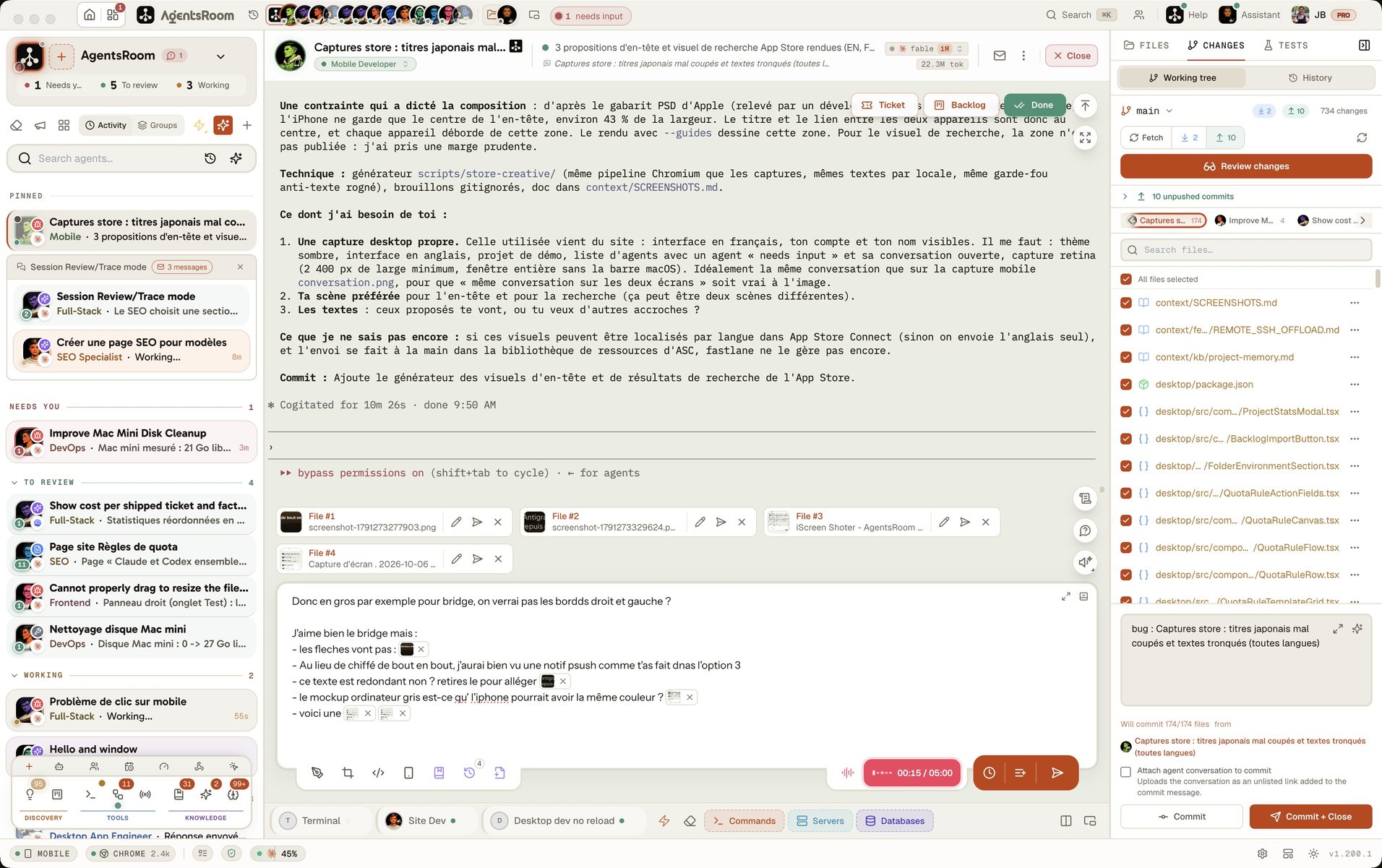
Lihat AgentsRoom beraksi
Bagaimana AgentsRoom menjalankan agen pengkodean Anda, dan di mana memori yang mereka tulis berada.
Aplikasi desktop, dalam mode Sederhana
Di ponsel, demo menjalankan aplikasi desktop yang sebenarnya dalam mode antarmuka Sederhana: satu proyek, agen-agennya, satu prompt. Kokpit lengkapnya ada di komputer Anda.
Ketika Obsidian adalah pilihan yang lebih baik
Sejujurnya: sering. Obsidian dan Memori Proyek AgentsRoom tumpang tindih dalam satu pekerjaan sempit, dan Obsidian adalah produk yang lebih kuat hampir di mana saja di luar itu.
Anda ingin otak kedua, bukan hanya memori proyek
Obsidian dibangun untuk manajemen pengetahuan pribadi: penelitian, penulisan, catatan studi, catatan harian, administrasi kehidupan. Memori Proyek hanya menyimpan pengetahuan tentang proyek perangkat lunak, yang ditulis oleh agen yang mengerjakannya. Jika Anda ingin satu tempat untuk segala sesuatu yang Anda pikirkan, itu adalah Obsidian, dan AgentsRoom tidak berusaha untuk menggantinya.
Anda ingin file biasa yang sepenuhnya Anda miliki, offline
Vault Obsidian adalah folder Markdown di disk Anda, dapat dibaca dengan editor apa pun, tanpa akun yang diperlukan dan tanpa server yang terlibat. AgentsRoom menyimpan Memori Proyek di sisi server sehingga dapat dibagikan di antara pengguna proyek, menjaga cache lokal untuk UI. Jika kepemilikan lokal pertama dan penggunaan offline lengkap adalah prioritas, model Obsidian adalah yang Anda inginkan.
Anda ingin ekosistemnya
Hampir 6.000 plugin komunitas, ratusan tema, Canvas, Bases untuk tampilan gaya database, Publish untuk menempatkan vault secara online, dan aplikasi seluler yang matang. Memori Proyek adalah fitur yang terfokus: catatan, folder, pencarian, dan grafik. Tidak ada API plugin dan tidak ada aplikasi seluler untuk itu.
Menggunakan keduanya memerlukan 30 detik
Anda tidak perlu memilih. Kebanyakan orang menyimpan Obsidian untuk catatan pribadi mereka dan membiarkan AgentsRoom menyimpan proyeknya.
Pertahankan vault Anda
Tidak ada yang perlu diekspor, tidak ada yang perlu dimigrasikan. Obsidian tetap persis di tempatnya untuk catatan pribadi Anda dan segala sesuatu di luar basis kode.
Buka proyek Anda di AgentsRoom
Seret folder proyek masuk. Memori mulai kosong, tanpa struktur yang perlu diatur: folder dibuat saat agen pertama kali menulis ke dalamnya.
Biarkan agen mengisinya
Bekerja seperti biasa. Keputusan pertama, jebakan pertama, modul pertama yang dipahami dengan baik dicatat, dan sesi berikutnya dimulai dari situ.
Obsidian adalah salah satu dari beberapa cara memberi memori kepada agen Anda. Gambaran lengkapnya mencakup berkas CLAUDE.md, mem0, Letta, Zep, dan basic-memory, masing-masing dengan kompromi berbeda.
Bandingkan alat memori agen AIPertanyaan yang sering diajukan
Apa itu Obsidian?+
Apakah AgentsRoom alternatif Obsidian?+
Bisakah saya menggunakan Obsidian sebagai memori untuk Claude Code atau agen AI lainnya?+
Berapa biaya Obsidian dibandingkan dengan AgentsRoom?+
Apakah Obsidian mendukung kolaborasi waktu nyata pada vault yang dibagikan?+
Apakah AgentsRoom menyimpan catatan saya sebagai file Markdown di disk seperti vault Obsidian?+
Bisakah saya menggunakan AgentsRoom dan Obsidian bersama-sama?+
Apa alternatif terbaik untuk Obsidian untuk tim dan untuk agen AI?+
Apakah Obsidian memiliki grafik pengetahuan seperti AgentsRoom?+
Berikan agen Anda memori
Unduh AgentsRoom dan biarkan agen Anda mulai menuliskan apa yang mereka pelajari. Gratis, tanpa batas catatan.
Aplikasi pendamping: pantau agen Anda saat bepergian
Gunakan Claude, Codex, Antigravity CLI, atau penyedia AI lainnya.
Kirim bug dan permintaan langsung ke backlog publik Anda.
Perbandingan lainnya
Lihat bagaimana AgentsRoom dibandingkan dengan alat lain yang digunakan pengembang di sekitar agen mereka.